Chicago to New Orleans Road Trip
Chicago
12 nights
From
€2,179
pp

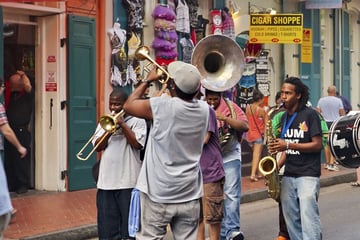
We've been sending British and Irish travellers to Louisiana for over two decades, and it never gets old. Whether you're planning your first trip or looking to go deeper than the French Quarter this time, here's our honest, insider guide to getting the most out of this extraordinary state.
Located in the south-east of Louisiana, straddling both banks of the mighty Mississippi, New Orleans is the city that most people come for – and for very good reason. It's a melting pot of cuisine, culture and, above all, music, and it rewards those who take their time exploring.
A word of advice before you land: fly into Louis Armstrong New Orleans International Airport, allow yourself at least four nights in the city (three is never enough), and resist the temptation to spend every evening on Bourbon Street. That's not to say you shouldn't experience Bourbon – you absolutely should, at least once, for the sheer spectacle of it – but the real New Orleans reveals itself a block or two away from the crowds.
The French Quarter

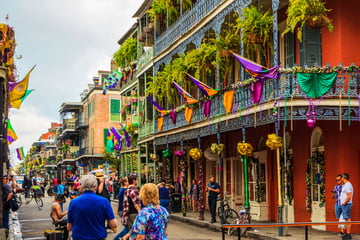
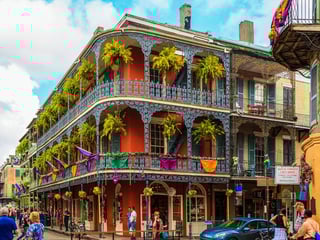
Every visit to New Orleans starts in the French Quarter, and that's entirely appropriate. This is where the city's European DNA is most visible: in the ornate cast-iron balconies dripping with ferns, in the colonnaded townhouses painted in shades of mustard and sage, in the smell of pralines drifting from the open doors of sweet shops on Decatur Street. It's impossibly atmospheric, and it's best explored on foot in the early morning before the heat sets in and the crowds arrive.
Bourbon Street gets all the attention, and by night it delivers exactly what it – live music, neon signs, frozen daiquiris in oversized cups and a carnival atmosphere that doesn't stop until the small hours. But don't overlook the quieter, more characterful streets that surround it. Dauphine Street, Ursulines Avenue and the blocks around Esplanade are where you'll find the French Quarter's real personality.
The French Quarter at night

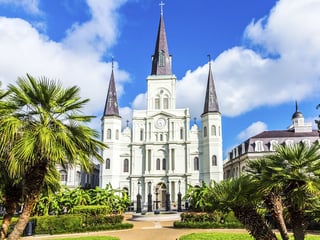
Set at the heart of the Quarter, Jackson Square is one of the most photographed spots in the American South – and justifiably so. The centrepiece is the magnificent equestrian statue of General Andrew Jackson, hat raised in a perpetual salute, with St Louis Cathedral rising dramatically behind it. It was declared a National Historic Landmark in 1960, and it's the very spot where Louisiana was formally transferred to the United States following the Louisiana Purchase of 1803. Take your time here. Street artists and tarot card readers line the iron fence around the square's edges, and the scene has a theatrical, timeless quality that a photograph never quite captures.
Jackson Square with St Louis Catheral in the background

Just a short walk from Bourbon Street, Musical Legends Park is the kind of place that stops you in your tracks. The park is peppered with life-sized bronze statues of New Orleans' most celebrated musicians – Louis Armstrong, Fats Domino, Pete Fountain – and live music starts up here each morning around 10am and continues until closing time. It's the perfect introduction to the city's sonic heart. Pull up a bench, order a coffee and a beignet from Café Beignet (which sits right on the park's edge), and let the music come to you. A beignet, incidentally, is a deep-fried choux pastry dusted with powdered sugar – utterly irresistible and messy in the most wonderful way.
If live music is your priority – and in New Orleans, it really should be – Frenchmen Street in the Marigny neighbourhood is where locals go when they want the real thing. On any given night you'll find half a dozen venues with outstanding jazz, blues, brass band and Zydeco performances, often with no cover charge. It's one of the great live music streets in the world, and most visitors who discover it never want to leave.
Running parallel to Bourbon, Royal Street is New Orleans' cultural and artistic spine. The architecture here is arguably the most beautiful in the Quarter, with elaborate wrought-iron galleries and grand Creole townhouses. The street is lined with independent art galleries showcasing everything from traditional oil paintings to contemporary mixed-media works, alongside antique shops stocked with silverware, clocks and Louisiana curiosities. It's the ideal place to find a genuinely meaningful souvenir – something you'll display at home and tell the story of for years.
If your dates allow it, experiencing Mardi Gras in New Orleans is one of those bucket-list moments that genuinely lives up to the hype. The season officially begins on Twelfth Night (6th January), when the first krewes begin their celebrations, and builds steadily towards the main event – Shrove Tuesday, known in the United States as Fat Tuesday (Mardi Gras in French, which is of course where the whole celebration gets its name). On that final day, the city erupts into a city-wide street party of parades, costumes, brass bands and flying beads. It's loud, colourful, joyful and completely unlike anything you'll experience anywhere else on earth.
Book accommodation many months in advance if you're planning a Mardi Gras trip – this is one occasion where going it alone is genuinely risky, and our specialists can help you navigate dates, locations and the best vantage points for the parades. Start planning your New Orleans holiday now.
Don't let the fact that it's a museum lull you into thinking this is an optional extra. The National WWII Museum is among the finest in the world and should be high on the list for any visitor with more than a passing interest in history. Its collection of restored artefacts, oral testimonies and immersive exhibits – including the extraordinary "Dog Tag Experience," which allows you to follow the journey of a real soldier throughout the war – makes it a deeply moving and genuinely unmissable experience. Set aside at least half a day.
The historic streetcar lines are not just a mode of transport – they're an experience in themselves. The St Charles line is the one most visitors gravitate towards, and rightly so. It departs from the edge of the French Quarter and trundles through the elegant Garden District, passing antebellum mansions half-hidden behind magnolia trees, oak-canopied avenues and the grand campus of Tulane University. The fare is just $1.25 each way (exact change required), making it both the most atmospheric and most affordable way to see New Orleans. The Riverfront line offers a different perspective, running along the Mississippi waterfront, while the Canal Street line connects the French Quarter with the cemeteries and Mid-City neighbourhood.
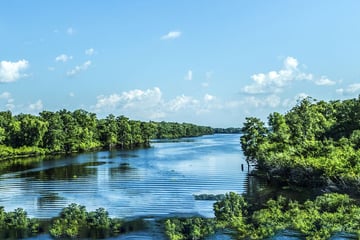
For a completely different vantage point, take to the water. Several operators run riverboat cruises along the Mississippi, from one-hour sightseeing trips to dinner and jazz cruises that go well into the evening. Seeing New Orleans from the river – the city skyline reflected on the brown water, the levees and warehouses slipping past – gives a sense of the scale and importance of the Mississippi that you simply can't get from the shore.
Mississippi Riverboat Cruise

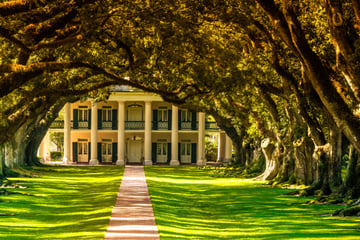
The River Road corridor that stretches along the Mississippi west of New Orleans is one of the most historically significant – and visually dramatic – stretches of road in the American South. Antebellum plantation houses, draped in Spanish moss and shaded by ancient live oaks, line both banks of the river. It's beautiful, and it's complicated; the best plantations now tell the full story of the enslaved people whose labour built them, not just the lives of the wealthy families who owned them.
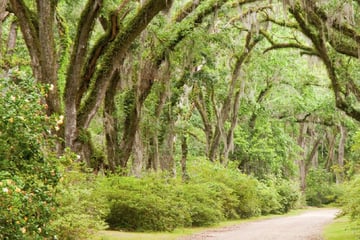
Oak Alley is, quite simply, one of the most beautiful plantation houses in America. The approach alone is enough to stop you in your tracks – a double avenue of 28 southern live oak trees, each around 300 years old, creates a cathedral-like canopy stretching 250 metres from the levee to the house's front door. The house itself is a stunning example of Greek Revival architecture, built in the 1830s for a prominent Creole family. Tours of the Big House are guided and comprehensive, covering both the lavish main rooms and the stories of the enslaved community who lived and worked on the estate. The on-site restaurant serves excellent Creole food, and the grounds are particularly lovely in late afternoon light.
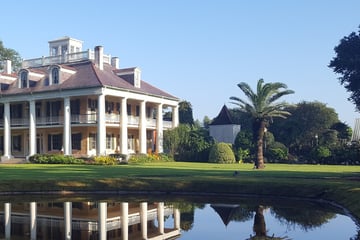
Known historically as the "Sugar Palace," Houmas House was one of the most productive sugar plantations in the ante-bellum South, and the 38-acre estate has been immaculately restored. The main house's 16 rooms are filled with period furnishings and Louisiana artwork, and film buffs will recognise it from its appearance in The Green Book. But it's the gardens that genuinely steal the show – formal parterres, fountains, ancient oaks and tropical plantings that feel more like something from an 18th-century French estate than the American South. It's worth the drive for the gardens alone.
Exploring plantation country is best done at your own pace, with a hire car giving you the freedom to linger. Our Louisiana fly-drive holidays are built around exactly this kind of independence – a base in New Orleans plus the freedom to follow the River Road whenever the mood takes you.
Oak Alley Plantation
e
The Art Deco Louisiana State Capitol is the most distinctive building in Baton Rouge, and it's hard to miss – at 34 storeys and 450 feet, it's the tallest state capitol building in the United States. Completed in 1932 and surrounded by 30 acres of manicured gardens, it was the pet project of the controversial Governor Huey Long, who is buried in the grounds. Take the elevator to the observation deck on the 27th floor for panoramic views across the city and the Mississippi River that are genuinely spectacular, particularly at dusk.
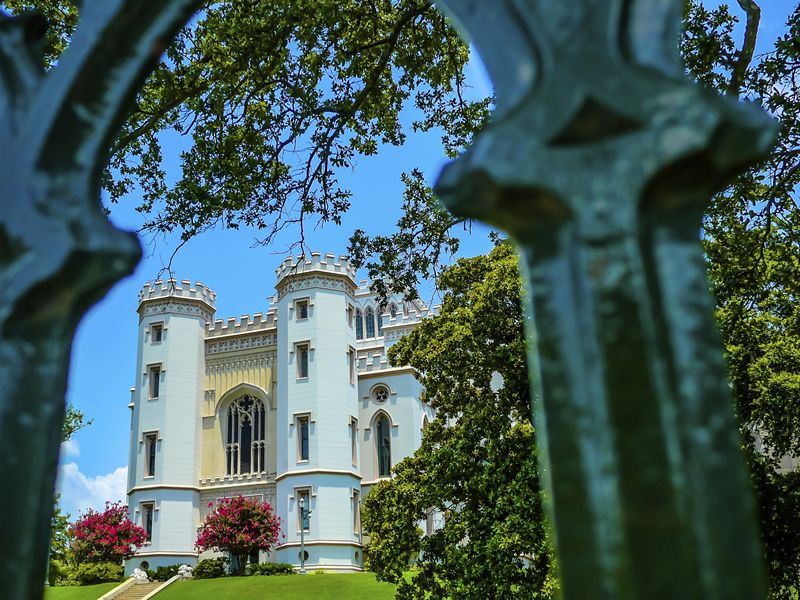
A short walk from the new capitol, the Old State Capitol is a completely different architectural animal – a Gothic Revival castle, all turrets and pointed arches, perched dramatically on a bluff above the Mississippi. Built in 1847 and extensively restored after being burned by Union forces during the Civil War, it's a striking building even if you don't venture inside. The museum within covers Louisiana's complex political history with considerable candour, and it's well worth an hour of your time.
Moored on the Mississippi riverfront, the USS KIDD is the only World War II Fletcher-class destroyer to have retained its original wartime configuration – it was never modernised or refitted after the war, which makes it an extraordinary time capsule. You can walk the decks, explore the engine rooms and crew quarters, and visit the Louisiana Veterans Hall of Honor, a tribute to the state's exceptional military history. For anyone with even a passing interest in naval history, it's a compelling way to spend a morning.
The Louisiana State Capitol

One of the oldest surviving Creole plantation houses in Louisiana, Magnolia Mound dates from the late 18th century and is a beautiful example of the architectural fusion that makes Louisiana so distinctive – French and West Indian building traditions blended seamlessly. The house still retains much of its original 18th and 19th-century character, surrounded by ancient oak trees, and the guided tours here are genuinely informative about the Creole way of life that defined early Louisiana.
The Old State Capitol
This is one of those hidden gems that regular visitors to Baton Rouge swear by, and it's the kind of place that gives you a much richer understanding of Louisiana's layered history. The open-air museum presents the everyday lives of pre-industrial Louisiana – from enslaved African Americans to French Acadians to Anglo-American settlers – through a collection of authentically furnished historical buildings set across a sprawling site. The Working Plantation complex, in particular, brings 19th-century plantation life into vivid, unsentimental focus.
Housed in a beautifully converted 19th-century railroad depot on the Mississippi waterfront, the Louisiana Arts & Science Museum manages the impressive trick of being genuinely interesting for adults and children simultaneously. The art galleries span American and European work, contemporary Louisiana art and photography, while the science wing features interactive exhibits that genuinely engage younger visitors. The Ancient Egypt Gallery – complete with mummies and artefacts – and the on-site Planetarium are particular highlights.
View of Baton Rouge from the State Capitol

When to go: The sweet spot for Louisiana is October through to early December and late February through to April. Spring brings warm temperatures and vivid wildflower blooms along the roadsides; autumn is cooler and less humid. July and August are hot and humid.
Getting around: New Orleans itself is very walkable in the French Quarter and Garden District, and the streetcar network covers the main sights. For exploring further afield – the plantation country, the bayous, Baton Rouge – a hire car is strongly recommended. Many of our fly-drive itineraries are built around exactly this combination: a base in New Orleans plus the freedom to explore the wider state at your own pace.
What to eat: Louisiana's food culture is extraordinary and deserves serious attention. In New Orleans, don't leave without trying a classic po'boy sandwich (roast beef or fried shrimp), a bowl of red beans and rice, and Commander's Palace's turtle soup if your budget stretches. In the bayou country around Lafayette, focus on crawfish étouffée, boudin sausage and cracklins from roadside stalls. And wherever you are, start the day with beignets and café au lait at Café Du Monde in the French Quarter – it's touristy, it's crowded and it's completely worth it.
We've been helping holidaymakers from the UK and Ireland discover Louisiana for over 20 years, and it remains one of our most-loved destinations – not least because it delivers so much that feels genuinely unlike anywhere else. The combination of world-class food, live music, extraordinary history and Southern warmth makes it endlessly rewarding, whether you're a first-timer or coming back for the third time.
Our Louisiana holidays range from tailor-made fly-drives that let you explore the state entirely at your own pace to fully escorted group tours through the wider Deep South. Tours like our Rhythms of the South itinerary take in the music heartland from Nashville down to New Orleans, while the Southern Explorer covers the broader sweep of the region with expert local guides. For those who want to discover Louisiana as part of a longer American journey, our Self-Drive Chicago to New Orleans route is one of our most popular itineraries – a genuine road trip that ends in the best possible city.
Whatever shape your Louisiana adventure takes, our specialists know this state inside out. We can advise on the right hotel for the French Quarter (and why the right street matters more than you'd think), the best time to visit the plantations, and how to get the most out of a bayou swamp tour. Call us on 01342 331798 to start planning – we'd love to help you fall in love with Louisiana.
October to early December and late February to April are the sweet spots. Autumn is cooler and drier, spring is warm and colourful, and both are far more comfortable than the heat and humidity of July and August. If Mardi Gras is your goal, plan for late January or February and book at least six months ahead — it's not a trip to leave to chance.
We recommend four nights as a minimum, five if you can manage it, to give you chance to discover Frenchmen Street, ride the St Charles streetcar, and properly slow down. But if your itinerary only allows for two or three nights then make sure you take time to plan out what you want to see and do.
Absolutely. New Orleans itself is best explored on foot and by streetcar, but a hire car is essential the moment you want to venture further — to the plantation houses along the River Road, the bayou country around Lafayette, or up to Baton Rouge. Distances are manageable and the roads are straightforward. Our Self-Drive Chicago to New Orleans itinerary is one of our most popular for exactly this reason.
In New Orleans: a po'boy, red beans and rice, a bowl of gumbo, and beignets with café au lait at Café Du Monde — non-negotiable. If your budget stretches, Commander's Palace in the Garden District is worth every penny for a special dinner. Out in bayou country around Lafayette, switch focus to crawfish étouffée, boudin sausage and cracklins from roadside stalls. Louisiana's food culture is extraordinary, and it genuinely varies by region.
Creole culture grew up in and around New Orleans — urban, refined, drawing on French, Spanish, African and Caribbean influences. Cajun culture developed in the rural bayou country to the west, among the descendants of French-speaking Acadians expelled from Canada in the 18th century — heartier, more rustic, built around rice, pork and whatever could be caught locally. Both traditions overlap, but travel from New Orleans to Lafayette and you'll feel the shift clearly — in the food, the music (jazz versus Zydeco) and the pace of life.

Sign up to our newsletter
Be the first to know about our exclusive offers and holiday inspiration by email.